


Corrosive slurries are a special kind of nightmare. You are not just fighting abrasion, which already wears down pumps quickly enough. You are also fighting chemical attack that eats away at the metal itself, weakening it from the inside out while particles scrape away the surface. Most pumps handle one or the other, but very few are built to handle both simultaneously. CNSME PUMP recognized this gap years ago and developed a range of heavy duty slurry pump specifically engineered for corrosive environments. Whether you are dealing with acidic mine drainage, chemical plant effluent, or salt saturated brines, these pumps bring together material science and hydraulic design to survive conditions that would destroy ordinary equipment in weeks.
Identifying the Corrosive Culprits in Your Slurry
Before you can solve a corrosion problem, you need to know exactly what you are fighting. Not all corrosive slurries behave the same way. Low pH acids like sulfuric or hydrochloric attack metal through hydrogen embrittlement and general surface etching. High pH caustics cause different damage patterns, often attacking seals and elastomers before the metal itself. Then you have chlorides, which cause pitting and stress corrosion cracking, especially at elevated temperatures. CNSME works with plant operators to analyze their specific slurry chemistry before recommending a pump configuration. A simple pH test is not enough. You need to know the chloride concentration, the presence of oxidizing agents like ferric iron, and the operating temperature range. With that information, CNSME engineers can select the right combination of base alloy, lining material, and seal elastomer to match your exact corrosive environment. Guessing is expensive. Testing is cheap.
High Chrome White Iron for Mild Corrosion
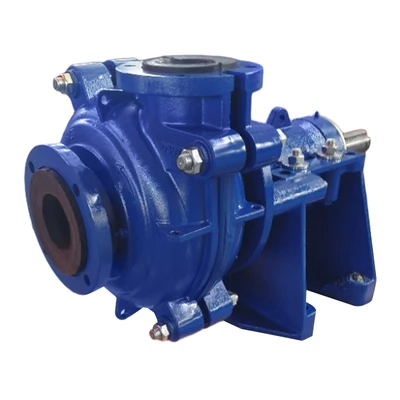
For slurries that are mildly corrosive but highly abrasive, CNSME’s high chromium white iron often provides the best balance. This material contains significant chromium content, typically twenty five to thirty percent, which forms a passive oxide layer on the surface. That oxide layer resists chemical attack from moderately acidic or alkaline solutions while the hard carbide particles underneath handle the abrasion. The beauty of this approach is that the material maintains its hardness even in corrosive environments, unlike standard stainless steels that often sacrifice hardness for corrosion resistance. Mines dealing with mildly acidic tailings, where pH ranges from five to seven, have found that CNSME white iron pumps outlast standard stainless pumps by a factor of three to one. The white iron simply wears slowly while the stainless steel erodes rapidly once its protective oxide layer is abraded away. The key is knowing where the line is between mild and severe corrosion. That line varies with temperature, velocity, and specific chemistry.
Rubber Linings for Aggressive Chemical Attack
When the chemistry turns truly aggressive, hard metal alone will not survive. Think about slurries with pH below three or above eleven, or those containing chlorides at high temperatures. In these environments, CNSME offers heavy duty slurry pumps with natural or synthetic rubber linings. Rubber provides outstanding resistance to most acids and alkalis, while its elasticity absorbs the impact of abrasive particles without cracking. The trick is selecting the right rubber compound. Natural rubber excels in acidic environments but degrades in oils or solvents. Neoprene resists oils and weathering but has lower abrasion resistance. Hypalon handles strong oxidizers like bleach or hydrogen peroxide. CNSME maintains a library of rubber formulations and can recommend the exact compound based on your slurry analysis. Rubber lined pumps require careful handling during installation because the linings can be damaged by improper bolt torque or welding near the flanges. But when they are installed correctly, they survive in corrosive environments that would dissolve an all metal pump in months.
Duplex and Super Duplex Stainless Steel Options
For corrosive slurries that are too aggressive for white iron but too abrasive for rubber, CNSME turns to duplex and super duplex stainless steels. These alloys combine roughly equal parts ferritic and austenitic microstructures, giving them high strength, excellent corrosion resistance, and reasonable abrasion resistance. The molybdenum content, typically three to four percent in super duplex grades, provides outstanding resistance to pitting and crevice corrosion in chloride environments. These alloys also resist stress corrosion cracking better than standard austenitic stainless steels. CNSME offers complete wet ends cast from duplex stainless for applications like flue gas desulfurization where limestone slurry becomes acidic and chloride laden. Power plants using CNSME duplex pumps have documented component lives exceeding five years, while standard stainless pumps lasted barely one year. The higher initial cost of duplex stainless pays for itself many times over in reduced replacement frequency.
Protecting the Shaft and Bearings
Corrosive slurries do not just attack the wet end. They find their way past seals and into bearing housings, contaminating lubricants and corroding shafts. A pump can have a perfectly resistant volute and impeller but still fail because the shaft corrodes through where it passes through the stuffing box. CNSME addresses this with several protective strategies. The shaft is manufactured from a high strength stainless alloy in corrosive service packages, not the standard carbon steel. The bearing housing includes a purge port that allows operators to maintain a slight positive pressure with clean air or nitrogen, preventing corrosive fumes from entering. Exposed fasteners are upgraded to stainless steel with anti seize coatings. Even the nameplate is corrosion resistant. These details seem small, but they add up to a pump that survives the corrosive environment as a complete system, not just as a collection of resistant parts.
Seal Selection for Corrosive Service
Seals are often the weakest link in a corrosive slurry pump. The wrong elastomer swells or hardens within weeks. The wrong seal face material pits or cracks. CNSME offers seal options specifically selected for corrosive environments. For mechanical seals, silicon carbide faces provide excellent corrosion resistance across a wide pH range, while tungsten carbide resists abrasion better but has lower chemical tolerance. For elastomers, Viton handles most acids and fuels, while Kalrez stands up to the most aggressive chemicals including concentrated sulfuric acid. In extreme cases, CNSME can supply mechanical seals with perfluorinated elastomers and sapphire or diamond coated faces. For packing systems, PTFE based packing materials provide chemical inertness while maintaining the flexibility needed for effective sealing. The correct seal combination depends entirely on your specific slurry chemistry, which is why CNSME insists on a detailed fluid analysis before making recommendations.
Real World Success in Chemical Mining
Theory is fine, but results are what matter. Consider a phosphate mining operation in North Africa where the slurry contains phosphoric acid at pH two, combined with sharp gypsum crystals and sand. Standard pumps lasted four to six months before the combination of acid corrosion and crystal abrasion destroyed them. CNSME installed rubber lined heavy duty slurry pumps with hypalon linings and silicon carbide mechanical seals. Those pumps have been running for over three years with only routine maintenance. Consider a copper mine in Arizona dealing with leach solutions containing sulfuric acid and ferric iron, an extremely corrosive combination. CNSME supplied pumps with super duplex stainless steel wet ends and Kalrez seals. The mine reports seal life exceeding two years, compared to six months with previous seal designs. These are not laboratory successes. These are real pumps handling real corrosive slurries in real industrial environments, proving that CNSME has solved the puzzle of handling corrosive slurries without sacrificing the abrasion resistance that heavy duty pumps require.


