


Energy costs don’t show up on a maintenance report, but they quietly eat away at your operating budget month after month. A slurry pump running continuously can consume tens of thousands of dollars in electricity every year. That’s why the efficiency conversation matters. Most people assume all slurry pumps are power-hungry beasts, but that’s not the whole story. CNSME PUMP has built several design features into their vertical slurry pumps that directly reduce energy consumption without sacrificing the ruggedness needed for abrasive duties. Understanding where those efficiencies come from helps you make smarter purchasing decisions and may even justify replacing older, less efficient pumps. Let me break down the engineering choices that make these vertical pumps surprisingly gentle on your power bill.
Short, Straight Suction Path Reduces Inlet Losses
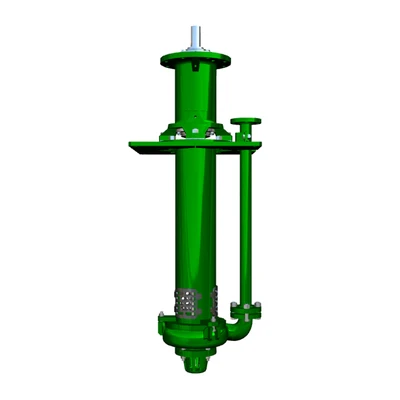
Every bend, every length of pipe, and every fitting on the suction side of a pump wastes energy. Hydraulic engineers call these losses “suction head losses,” and they can be substantial. A horizontal pump typically pulls slurry through several feet of intake pipe, often with an elbow or a foot valve. That pipe creates friction. The fluid has to accelerate through it, and any turbulence costs pressure. A CNSME vertical pump flips this arrangement. The impeller sits directly in the sump, with the intake bell often just inches from the liquid. The slurry doesn’t travel through a long pipe before reaching the impeller. It simply flows over the lip of the intake bell. The result is that the pump spends its motor power moving slurry upward through the discharge, not fighting friction on the suction side. Field tests show that this short suction path can reduce total energy consumption by five to fifteen percent compared to a horizontal pump serving the same sump with a ten-foot suction line.
Optimal Submergence Eliminates Vortex Air Ingestion
Air is the enemy of pumping efficiency. When a pump ingests air through a vortex, the impeller churns a mixture of liquid and bubbles instead of moving solid slurry. The motor keeps drawing full amperage, but the flow rate drops sharply. You’re paying for electricity that isn’t doing useful work. Horizontal pumps are vulnerable to vortexing when the sump level drops below a critical point. Vertical pumps from CNSME are designed with the impeller positioned low in the sump, typically just above the floor. This placement creates consistent submergence regardless of the surface level. Even when the sump is nearly empty, the impeller remains covered. The intake bell also incorporates anti-vortex ribs or vanes that break up swirling motion before it can form a full air core. The practical result is that a CNSME pump wastes almost no energy on air recirculation. Every kilowatt-hour goes into moving slurry, not churning foam.
Precision Cast Impellers for Hydraulic Smoothness
The shape of the impeller matters enormously for efficiency. A rough, poorly finished impeller creates turbulence as slurry passes over its surfaces. That turbulence shows up as heat and vibration—both signs of wasted energy. CNSME uses precision investment casting for their impellers, followed by hand-finishing of the vane profiles. The goal is a smooth, mathematically optimized curve that guides slurry with minimal resistance. The difference between a rough-cast impeller and a finished one can be three to five percentage points in efficiency. That doesn’t sound like much until you do the math. A fifty-horsepower pump running continuously at three percent lower efficiency wastes about 1.5 horsepower continuously. Over a year, that’s over 10,000 kilowatt-hours of wasted electricity. The precision casting costs more upfront, but it pays back quickly in avoided energy costs. And because the smooth surface also resists buildup of sticky materials, the efficiency stays consistent over time rather than degrading as scale accumulates.
Close-Coupled Motor Design Eliminates Drive Losses
Many slurry pumps, especially larger horizontal units, use a belt drive or a long spacer coupling between the motor and the pump shaft. These drive systems consume energy. Belts slip and require tensioning. Couplings have slight misalignments that generate friction. Long shafts between bearings add windage losses. CNSME vertical pumps use a close-coupled or direct drive arrangement. The motor mounts directly above the bearing housing, and the pump shaft connects to the motor shaft with a rigid coupling or, in some models, shares the same shaft. This eliminates belt losses entirely and minimizes coupling losses. The vertical lineup also means the shaft is straight and short for its length, with no intermediate bearings adding friction. For a typical installation, eliminating belt drive losses alone saves two to four percent of motor power. Over the life of the pump, that saving often exceeds the initial cost difference between a belt-driven horizontal pump and a direct-drive vertical model.
Adjustable Impeller Clearance Maintains Peak Efficiency
Here’s a reality that many pump users ignore. A brand-new vertical slurry pump operates at its peak efficiency. But as the impeller and volute liner wear, the clearance between them grows. That growing gap allows more and more slurry to recirculate inside the casing instead of being discharged. Efficiency drops, sometimes by twenty percent or more, long before the pump actually fails. CNSME vertical pumps include an external impeller clearance adjustment mechanism. Without pulling the pump from the sump, you can loosen lock nuts, turn adjusting screws, and lower the impeller back to its optimal clearance. This adjustment restores the tight hydraulic seal between the impeller and the liner. The motor draws the same amperage, but flow and pressure return to near-new levels. Performing this adjustment every six months keeps the pump operating in its efficiency sweet spot continuously. In contrast, a horizontal pump with fixed clearance slowly becomes less efficient until you replace the wear parts—which most plants postpone until failure.
Lower Bearing Friction Through Single Bearing Housing
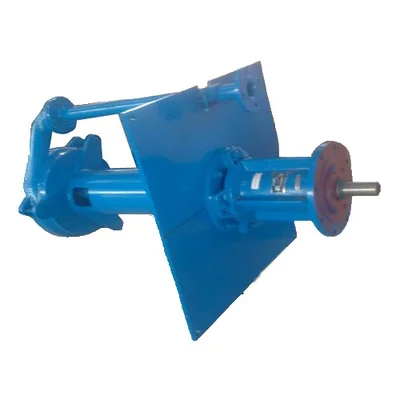
Every bearing in a pump consumes power. The friction inside a rolling element bearing is small but not zero. Multiply that by two or three bearings, and the losses add up. A traditional horizontal slurry pump typically has two bearings supporting the shaft—one near the coupling and one near the impeller. A long-coupled vertical pump might have three. CNSME’s cantilever vertical pumps use a single bearing housing at the top. That one housing contains two bearings back-to-back, but they share the same grease cavity and are optimized for low friction. The lower end of the shaft runs in a replaceable bushing that contacts the slurry directly. Surprisingly, that bushing consumes less power than a rolling bearing because it operates with a thin film of liquid lubrication rather than rolling friction. The net result is that a cantilever vertical pump has about half the total bearing friction of a comparable horizontal pump. That difference shows up as lower motor amperage at the same flow rate.
Reduced Seal Drag from Above-Sump Placement
Mechanical seals are another source of hidden energy loss. A typical mechanical seal generates friction between its two polished faces. That friction increases with the pressure of the slurry being sealed. In a horizontal pump, the seal operates at full discharge pressure, so the friction is significant. In a CNSME vertical pump, the seal sits above the mounting plate, and the slurry never reaches that elevation under normal conditions. The seal sees only atmospheric pressure or a slight positive pressure from the air purge. Lower pressure means lower face loading, which means less friction. Some vertical models don’t use a mechanical seal at all, relying instead on a simple labyrinth or lip seal that has even lower drag. Eliminating the high-pressure seal can save one to two percent of motor power. Again, that’s not a dramatic number by itself, but when you add it to the savings from the short suction path, the beltless drive, the optimized impeller, and the low bearing friction, the total improvement often reaches fifteen to twenty percent. That’s the difference between a pump that’s merely adequate and one that pays for its premium price through lower monthly electric bills.


