


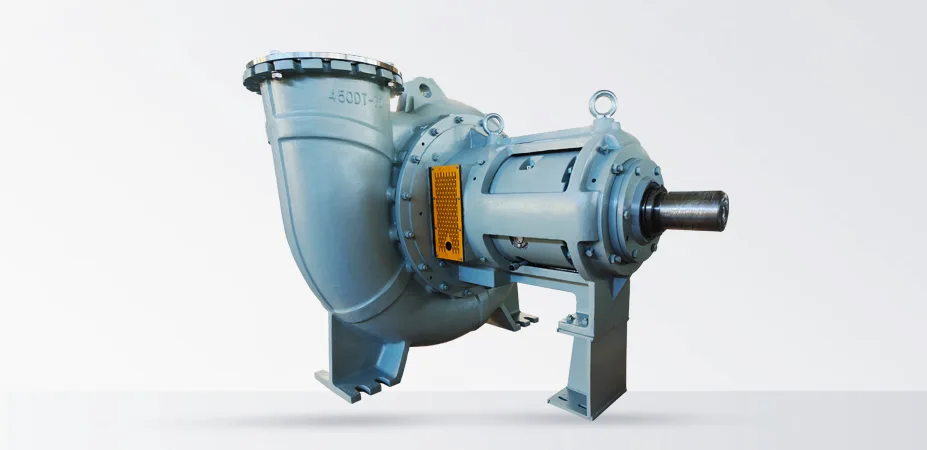
Corrosion is a sneaky enemy. Abrasion you can see and hear, but corrosion often works silently beneath the surface, thinning walls and weakening components until something suddenly fails. When you combine corrosion with abrasion, you get a truly destructive force that eats through ordinary pumps in record time. Chemical processing plants, mining operations dealing with acid leach circuits, and industrial facilities handling acidic or caustic slurries all face this double threat. CNSME PUMP has developed a thoughtful approach to corrosive slurry handling that goes far beyond simply choosing a different material. Their centrifugal slurry pump are engineered to survive environments where most equipment simply gives up.
Material Selection Matched to the Specific Chemistry
The first mistake many plant operators make is assuming one corrosion-resistant material works for everything. Stainless steel is great for some acids but fails rapidly in chloride environments. Rubber linings handle mild acids but swell and degrade in oils or solvents. CNSME offers a range of material options and helps customers select the right one for their specific chemistry. For highly acidic slurries with pH below three, they recommend high-alloy stainless steels or titanium where budget allows. For mixed acid-chloride environments, duplex stainless steels provide excellent resistance. For alkaline slurries with pH above ten, natural rubber or specialized elastomers perform beautifully. The key is matching the material to the exact chemistry, not guessing or using a one-size-fits-all approach.

Rubber Linings as Chemical Barriers
Natural rubber and synthetic elastomers are among CNSME’s most effective tools for corrosive slurry handling. A rubber lining acts as a chemical barrier between the aggressive fluid and the metal casing. The rubber absorbs the chemical attack while the metal casing provides structural strength. This combination is brilliant because it separates the two functions: strength from the metal, chemical resistance from the rubber. CNSME uses specifically formulated rubber compounds that resist a wide range of acids, alkalis, and salts. The rubber also handles fine abrasive particles well because its弹性 absorbs impact rather than allowing cutting wear. For applications like flue gas desulfurization or mineral acid handling, a rubber-lined CNSME pump often outlasts an all-metal pump by a factor of three to one.
High-Chrome Iron for Mildly Corrosive Abrasive Slurries
Not every corrosive slurry is highly aggressive. Many mining and industrial slurries are mildly acidic or alkaline while being extremely abrasive. In these environments, high-chrome white iron is often the best choice. The chromium content, typically between fifteen and thirty percent, forms a passive oxide layer that resists mild chemical attack. Meanwhile, the hard chromium carbide particles provide outstanding abrasion resistance. CNSME has fine-tuned their high-chrome alloys to balance hardness and corrosion resistance for specific pH ranges. A standard high-chrome iron works well for pH levels between four and ten. Outside that range, they can adjust the alloy composition. The result is a single material that handles both wear mechanisms without needing separate linings or coatings.
Seal Systems That Protect Against Chemical Leakage
Corrosive slurries create a special problem for seals. A tiny leak of acidic slurry not only damages the seal faces but can also spray dangerous chemicals onto workers and equipment. CNSME addresses this with multiple seal options designed for chemical service. Their double mechanical seal arrangement with a pressurized barrier fluid is the gold standard for hazardous corrosive slurries. The barrier fluid is chosen to be compatible with the process chemistry and is kept at a higher pressure than the slurry. Even if the inner seal fails, the barrier fluid leaks into the process, not the other way around. For less critical applications, expeller seals with a clean water flush work well, keeping the corrosive slurry away from the shaft and bearing area entirely.
Casing and Component Design Minimizing Crevices
Corrosion often starts in tiny crevices where stagnant fluid accumulates. A small gap between a bolt and a counterbore, or a poorly draining pocket in the casing, becomes a concentrated corrosion cell. CNSME designs their pump casings and components with corrosion prevention in mind. All internal surfaces are smooth and self-draining. Flanges use full-face gaskets rather than raised faces to eliminate crevices. Fasteners are countersunk and sealed with corrosion-resistant washers. The volute and impeller have no sharp internal corners where stagnant zones can form. These design details seem minor individually, but together they eliminate most of the common starting points for corrosion damage. A pump that avoids localized corrosion will far outlast one that looks good on paper but has poor detail design.
Temperature Considerations for Corrosive Duty
Corrosion rates approximately double for every ten degree Celsius increase in temperature. A slurry that is mildly corrosive at seventy degrees can become aggressively destructive at ninety degrees. CNSME pumps handle hot corrosive slurries through careful material selection and thermal management. Rubber linings have maximum temperature limits, typically around eighty degrees Celsius for natural rubber and slightly higher for specialty elastomers. For hotter slurries, they recommend metal alloys with appropriate high-temperature corrosion resistance, such as duplex stainless steels or Hastelloy. The bearing housing and seal flush system are designed to keep critical components cooler than the process fluid. Proper insulation and cooling jackets are available as options. Never assume a material that works at room temperature will perform the same way at elevated temperatures.
Maintenance Practices for Corrosive Environments
Even the best pump needs proper care in corrosive service. CNSME recommends several maintenance practices specific to corrosive slurries. First, always flush the pump with clean water before any maintenance work. Residual corrosive slurry inside the casing will continue attacking surfaces during downtime. Second, keep spare parts stored in a dry, climate-controlled area. Corrosion does not stop just because a part is on a shelf. Third, establish a regular inspection schedule for the wet end components, looking for pitting, thinning, or discoloration that signals chemical attack. Finally, consider installing corrosion monitoring coupons inside the pump casing or in the piping near the pump. These small metal samples can be removed and weighed periodically to measure actual corrosion rates. This data allows you to predict component life accurately and replace parts before failure, not after.


