


Power systems form the backbone of modern infrastructure, supplying electricity to industries, commercial establishments, and residential communities. As power networks grow in complexity, the need for reliable protection mechanisms becomes increasingly critical. Among the essential components that ensure safe and efficient electrical operations are the isolator and the circuit breaker in power system protection architecture.
These devices work together to prevent accidents, minimize downtime, and protect valuable electrical equipment from damage caused by faults, overloads, and short circuits. Understanding their functions and coordination is vital for engineers, facility managers, and anyone involved in electrical system design or maintenance.
The Importance of Protection in Power Systems
A power system consists of generation units, transmission lines, substations, distribution networks, and end-user connections. At every stage, electrical faults can occur due to various reasons such as:
- Equipment failure
- Insulation breakdown
- Lightning strikes
- Overloading
- Human error
- Environmental factors
Without proper protection mechanisms, these faults can lead to severe equipment damage, fire hazards, prolonged outages, and safety risks. This is where the coordinated use of an isolator and a circuit breaker in power system protection becomes essential.
What Is an Isolator?
An isolator is a mechanical switching device used to disconnect a portion of an electrical circuit for maintenance or servicing purposes. It ensures that a section of the system is completely de-energized and safe for personnel to work on.
Unlike automatic protective devices, isolators are typically operated manually and are used only when the circuit is not carrying current. Their primary function is to provide visible and reliable disconnection.
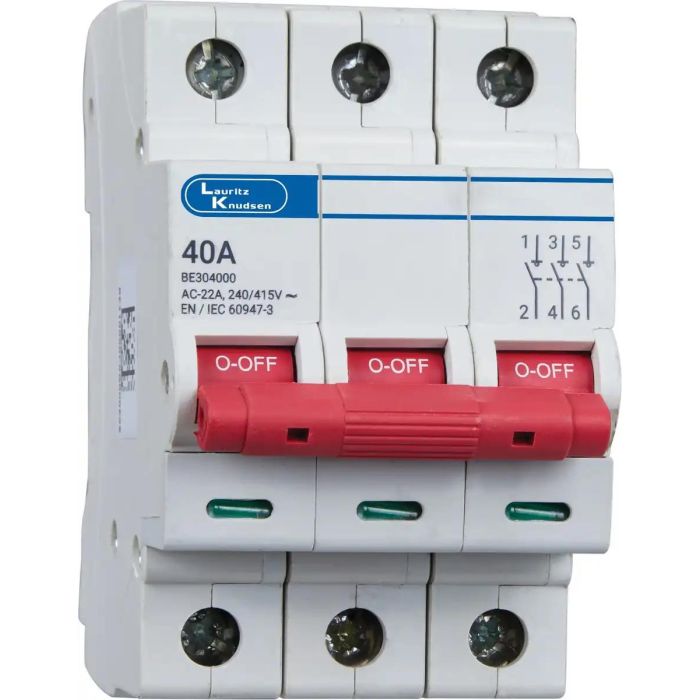
Key Characteristics of an Isolator
- Operated only under no-load conditions
- Provides visible isolation
- Used mainly for maintenance and safety
- Installed on both sides of major equipment
- Simple mechanical construction
Isolators are commonly found in substations, industrial plants, and high-voltage installations where maintenance operations are frequent.
What Is a Circuit Breaker in Power System?
A circuit breaker in power system protection is an automatic switching device designed to interrupt current flow during abnormal conditions such as overloads or short circuits. Unlike an isolator, it can operate under load and fault conditions.
Circuit breakers are engineered to detect faults and immediately disconnect the affected section of the network, preventing further damage. They play a central role in maintaining system stability and protecting equipment.
Key Features of Circuit Breakers
- Automatic operation during faults
- High fault current interruption capacity
- Fast response time
- Arc extinguishing mechanisms
- Suitable for load and fault interruption
Different types of circuit breakers are used depending on voltage levels and application requirements, including air, oil, vacuum, and SF6 circuit breakers.
How Isolators and Circuit Breakers Work Together
Although both devices serve different purposes, they function as complementary components within a protection system.
- The circuit breaker in the power system detects and interrupts fault currents automatically.
- Once the circuit breaker has opened and current flow has stopped, the isolator is used to physically disconnect the section for maintenance.
- The isolator ensures visible separation and guarantees that the circuit remains de-energized.
This sequence ensures both operational protection and maintenance safety.
Role of Isolator in Power System Protection
The isolator plays a crucial supporting role in system reliability.
Ensuring Personnel Safety
Before maintenance begins, isolators are opened to ensure no accidental energization occurs. This prevents electric shock and equipment hazards.
Facilitating Maintenance
By isolating specific sections, technicians can safely inspect transformers, switchgear, transmission lines, and other components.
Preventing Backfeed
An isolator helps avoid reverse current flow during servicing or emergency shutdown procedures.
Providing Visible Confirmation
Many isolators are designed to offer clear visual confirmation of disconnection, which is vital in high-voltage installations.
Role of Circuit Breaker in Power System Protection
The circuit breaker in power system serves as the primary protective device.
Fault Detection and Interruption
It automatically interrupts current when abnormal conditions occur. This prevents equipment damage and reduces fire risks.
System Stability
Quick fault isolation prevents disturbances from spreading across the network.
Equipment Protection
Generators, transformers, and motors are safeguarded against excessive currents.
Operational Reliability
Circuit breakers minimize downtime by isolating only the faulty section rather than shutting down the entire system.
Key Differences Between Isolator and Circuit Breaker
Understanding the distinction between these devices clarifies their individual roles.
- An isolator is used for safety isolation and operates under no-load conditions.
- A circuit breaker in a power system protection operates automatically and can interrupt load and fault currents.
- Isolators are primarily mechanical, while circuit breakers incorporate sophisticated protection mechanisms.
Both are indispensable but serve different stages of the protection process.
Applications in Modern Infrastructure
Substations
High-voltage substations use isolators and circuit breakers extensively to manage power flow and enable safe maintenance.
Industrial Facilities
Heavy machinery and production lines require reliable fault protection through circuit breakers, while isolators allow safe equipment servicing.
Commercial Buildings
Large commercial complexes rely on circuit breakers for load protection and isolators for maintenance procedures.
Renewable Energy Installations
Solar farms and wind power systems incorporate both devices to ensure grid stability and operational safety.
Types of Isolators
Different configurations are used based on application requirements.
- Single break isolators
- Double break isolators
- Pantograph isolators
- Centre break isolators
Each type is selected based on voltage level, space constraints, and installation design.

Types of Circuit Breakers in Power System
Several types are used depending on voltage and fault current capacity.
- Air circuit breakers
- Oil circuit breakers
- Vacuum circuit breakers
- SF6 circuit breakers
Technological advancements have improved their efficiency, safety, and durability.
Safety Standards and Compliance
Power system protection equipment must comply with national and international safety standards. Proper installation and testing ensure reliability.
Routine inspections and maintenance are essential to ensure isolators and circuit breakers function correctly when needed.
Testing procedures may include:
- Insulation resistance testing
- Mechanical operation checks
- Contact resistance measurement
- Trip function testing
Adhering to safety standards enhances system longevity and operational efficiency.
Maintenance Best Practices
For Isolators
- Inspect mechanical components
- Check for corrosion or wear
- Ensure smooth manual operation
- Confirm visible gap alignment
For Circuit Breakers in Power System
- Test protective relays
- Inspect arc extinguishing chambers
- Verify trip settings
- Perform periodic functional testing
Proactive maintenance prevents unexpected failures and ensures uninterrupted power supply.
Technological Advancements
Modern protection systems now integrate digital monitoring and smart grid technologies. Intelligent circuit breakers can provide:
- Real-time diagnostics
- Remote monitoring
- Fault data analysis
- Predictive maintenance alerts
While isolators remain primarily mechanical devices, innovations have improved their durability and operational reliability.
Enhancing Overall Power System Reliability
A well-coordinated protection strategy significantly enhances network performance. The circuit breaker in power system protection quickly isolates faults, minimizing damage and maintaining system stability. The isolator then ensures safe maintenance operations and complete electrical separation.
Together, they form a robust safety framework that supports continuous and reliable electricity distribution.
Challenges in Power System Protection
As demand increases and renewable integration grows, protection systems face new challenges such as:
- Higher fault levels
- Bidirectional power flow
- Complex grid interconnections
- Cybersecurity concerns in digital systems
Advanced circuit breakers and carefully designed isolation systems are essential to address these evolving requirements.
Conclusion
In modern electrical infrastructure, ensuring safety and reliability is non-negotiable. The isolator plays a crucial role in providing safe mechanical disconnection during maintenance, while the circuit breaker in power system protection acts as the first line of defense against overloads and short circuits.
Though their functions differ, their coordinated operation ensures effective fault management, equipment protection, and personnel safety. By integrating both devices within a well-designed protection scheme, power systems can operate efficiently and securely even under demanding conditions.
For dependable and advanced electrical protection solutions tailored to modern infrastructure needs, Lauritz Knudsen Electrical and Automation delivers high-quality equipment designed to meet stringent safety standards and performance expectations.


